







Project Information
Country
India
Industry
Construction Technology
Organization Size
50 to 200
Solution Area
Azure Infrastructure Deployment
Products & Services
• Microsoft Azure
• Azure Virtual Network
• Azure Virtual Machines
• Azure Load Balancer
• Azure NAT Gateway
• Azure Key Vault
• Azure Managed Identities
• Azure Role-Based Access Control
• Network Security Groups
• Terraform
About the Organization
Ehnovate Technologies is developing an ERP platform for the construction sector. The platform is intended to support infrastructure projects such as flyovers, bridges, and government construction initiatives.
To prepare for the application’s future deployment, the organization needed a secure and scalable Azure foundation. The environment had to support application and database workloads while providing controlled administrative access, network separation, and consistent governance.
Challenge
Ehnovate Technologies needed a production-ready cloud environment before onboarding its ERP application. The infrastructure had to support future growth without compromising security or making the environment difficult to manage.
A key requirement was to separate the application, database, administration, load-balancing, and private endpoint layers. These workloads needed to communicate securely, but direct internet exposure of the backend servers had to be avoided.
The organization also required a controlled route for administrative access. Allowing administrators to connect directly to the application and database servers would have increased the attack surface and introduced unnecessary security risks.
The client needed to address several requirements:
- Build a secure Azure foundation for future ERP workloads
- Separate application, database, administration, and connectivity resources
- Protect backend systems from direct internet exposure
- Establish controlled administrative access
- Apply consistent identity and access controls
- Securely store secrets and sensitive configuration information
- Standardize infrastructure deployment
- Reduce the risk of configuration inconsistencies
- Prepare the environment for future monitoring, backup, disaster recovery, and automation services
Manual deployment was another concern. Without a standardized deployment method, future changes could lead to differences in configuration, naming, and resource organization.
Solution
IFI Techsolutions designed and deployed a secure Azure infrastructure environment in the Central India region. The solution established the networking, compute, security, governance, connectivity, and administrative components required to support Ehnovate Technologies’ future ERP platform.
The environment was built using Azure-native services and terraform. The overall design aligned with recommendations from the Microsoft Cloud Adoption Framework.
Structured Resource Organization
IFI Techsolutions created dedicated Azure resource groups for different infrastructure functions:
- Network resources
- Application resources
- Security resources
- Storage resources
Separating resources according to their purpose created a clearer management structure. Standard naming conventions were also applied to support consistent resource organization and simplify future expansion.
Segmented Network Design
An Azure Virtual Network was deployed with dedicated subnets for:
- Compute resources
- Database resources
- Administrative access
- Load balancing
- Private endpoints
This design created logical separation between the main infrastructure layers. It allowed the application, database, and administrative workloads to remain isolated while maintaining the communication required between authorized resources.
Network Security Groups were used to filter traffic and define which connections were permitted. Application and database workloads communicated through private IP addresses, reducing the need for direct public connectivity.
Controlled Administrative Access
IFI Techsolutions deployed a Windows-based Jump Server within the dedicated admin subnet.
Instead of allowing administrators to connect directly to the application and database virtual machines, the Jump Server provided a centralized entry point for managing the environment. SSH access to backend resources was restricted through the administrative subnet, with Network Security Group rules controlling permitted traffic.
This approach reduced the direct exposure of backend workloads and created a more controlled administrative access model.
Application and Database Compute Layers
Linux virtual machines were deployed for the future application and database layers. Each virtual machine was placed in its respective subnet to maintain separation between workloads.
A Windows virtual machine was deployed as the administrative Jump Server, giving authorized administrators a controlled route into the backend environment.
Together, these virtual machines established the base compute infrastructure required for future ERP application onboarding.
Identity, Access, and Security Controls
IFI Techsolutions implemented Azure-native identity and security services across the environment.
Azure Key Vault was included for secure secret storage. Managed Identities supported identity-based access to Azure resources, while Role-Based Access Control helped govern permissions.
Network Security Groups controlled network traffic between infrastructure layers. Private network communication further reduced unnecessary exposure by allowing internal workloads to communicate without relying on direct internet access.
Connectivity Services
Azure Load Balancer and Azure NAT Gateway were included to support the environment’s connectivity requirements.
The connectivity design allowed backend resources to remain within segmented network layers while supporting controlled traffic and private communication between workloads.
Standardized Deployment with Terraform
IFI Techsolutions used Terraform to deploy and standardize the Azure infrastructure.
A modular infrastructure design and consistent naming conventions created a repeatable deployment model. This reduced reliance on manual configuration and helped limit differences between infrastructure components.
The Terraform-based approach supported:
- Repeatable infrastructure deployment
- Consistent resource configuration
- Reduced configuration drift
- Standardized naming and resource organization
- Simpler infrastructure expansion in future phases
Architecture Overview
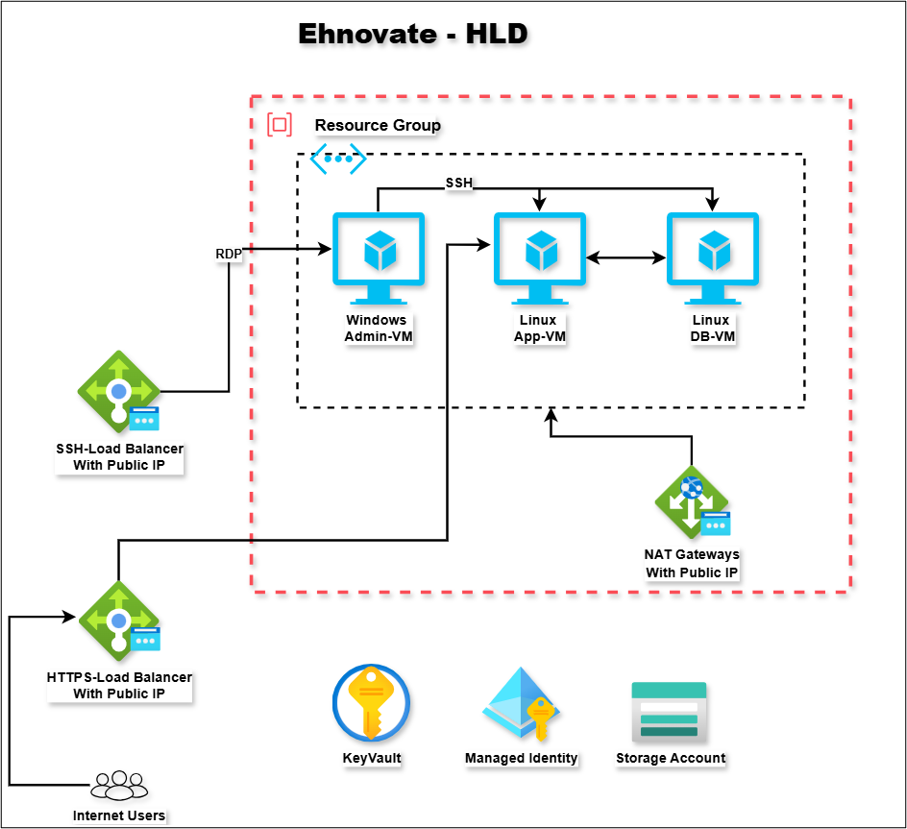
Implementation Challenges
The Azure infrastructure deployment required IFI Techsolutions to address several technical challenges related to administrative access, network separation, and deployment consistency.
Secure Administrative Access
Administrators needed a secure way to access the application and database servers. Providing direct internet access to these backend systems would have increased the attack surface and introduced unnecessary security risks.
IFI Techsolutions addressed this requirement by implementing a Windows-based Jump Server within a dedicated admin subnet. SSH access to backend virtual machines was restricted through this administrative layer, while Network Security Groups controlled permitted traffic.
This created a centralized access point for infrastructure management and kept the application and database servers protected from direct internet exposure.
Network Segmentation
The application, database, administration, load-balancing, and private endpoint resources needed to remain logically separated. At the same time, authorized communication between the different infrastructure layers had to continue.
IFI Techsolutions created dedicated subnets for each workload type and applied Network Security Groups to filter traffic. Private IP communication enabled internal workloads to communicate without requiring direct public connectivity.
This approach established clearer network boundaries and provided greater control over traffic moving between Azure resources.
Infrastructure Standardization
A manually deployed environment could have resulted in inconsistent configurations, naming differences, and configuration drift. It could also have made future infrastructure expansion more difficult to manage.
IFI Techsolutions used Terraform, a modular infrastructure design, and standard naming conventions to create a repeatable deployment model.
This improved deployment consistency, reduced reliance on manual configuration, and created a structured foundation for future changes.
Impact
The engagement provided Ehnovate Technologies with a production-ready Azure infrastructure foundation for its upcoming ERP platform.
Key outcomes included:
Security and Governance
Backend application and database servers were protected from direct internet exposure. Network Security Groups controlled traffic between infrastructure layers, while Role-Based Access Control helped govern access to Azure resources.
Azure Key Vault and Managed Identities supported more secure handling of secrets and identity-based access.
The use of separate resource groups and consistent naming conventions also created a clearer governance structure across the environment.
Controlled Administration
The Windows Jump Server established a centralized access point for administering backend resources.
Administrators could manage the application and database virtual machines through the dedicated admin subnet instead of connecting to those systems directly over the internet. This reduced the exposed attack surface and created a more controlled access model.
Workload Isolation
Dedicated subnets separated compute, database, administration, load-balancing, and private endpoint resources.
This structure improved control over internal network traffic while allowing authorized workloads to communicate through private connections.
Deployment Consistency
Terraform provided a standardized and repeatable method for deploying the infrastructure.
The modular design and naming standards helped reduce manual configuration inconsistencies and configuration drift. They also created a clearer path for expanding the environment in future phases.
Future Readiness
The Azure environment established the infrastructure required for future ERP application onboarding.
It also prepared the platform for the later introduction of:
- Monitoring and observability
- Backup services
- Disaster recovery
- Infrastructure automation
- Additional application workloads
These services were identified as future requirements and were not part of the completed deployment described in this case study.
Operational Readiness
The structured infrastructure, centralized administrative access, and standardized deployment model prepared the environment for ongoing managed service operations.
The project established a foundation that can be managed and expanded as Ehnovate Technologies introduces its ERP workloads and supporting services.
Conclusion
Ehnovate Technologies needed a secure Azure environment before deploying its construction-focused ERP platform. IFI Techsolutions designed and implemented the cloud foundation required to support that next phase.
The engagement introduced segmented networking, private workload communication, controlled administrative access, identity and security controls, and standardized Terraform deployment. Application, database, administration, load-balancing, and private endpoint resources were organized into dedicated network layers, while backend servers remained protected from direct internet exposure.
The resulting Azure environment gives Ehnovate Technologies a secure, structured, and scalable foundation for future ERP onboarding. It also provides a clear path for introducing monitoring, backup, disaster recovery, and automation services in later phases.